In Plokk, a high score usually begins with a board that still has options. Combos feel good, but a move that buys another turn can be the more useful choice.
If you are just starting, read Your first game of Plokk first. This guide is about the small decisions that become important once the board starts filling up.
Think in spaces, not just pieces
Before placing a shape, imagine what the empty area will look like afterward. Will it still hold something wider than a single block? Will a long lane stay open? Are you leaving a gap that depends on one very particular shape?
A piece can fit perfectly and still leave an awkward board. Try to preserve at least one compact open area and one longer lane when you can. These are useful habits, not a promise that every next tray will fit.
Place the least flexible shape deliberately
Check every piece you have been offered. If one has only a single reasonable home, account for it before filling that space with an easier piece.
You do not always need to place the largest piece first. Sometimes a small placement clears a row and creates a much better home for it. The point is to notice the dependency before you commit.
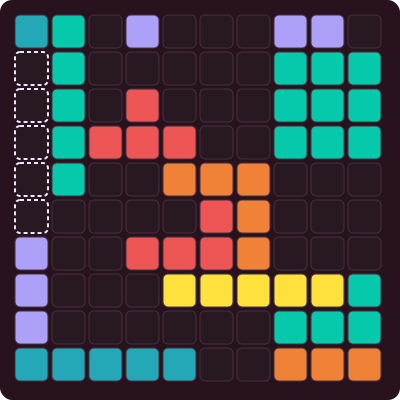
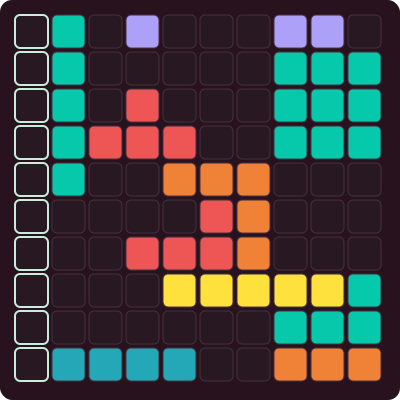
These are illustrated views of the real board in the beginner guide, rather than a promise about which pieces arrive next.
Notice the holes you are creating
One empty cell surrounded on all sides is a difficult space to use. Several disconnected holes can make a board look less crowded than it really is.
Ask whether a new hole will disappear with a near-term line clear. If it will, the trade may be reasonable. If it will remain trapped, look for a different placement.
You are not trying to avoid every imperfection. You are trying to avoid collecting empty cells that stop helping you.
Prepare intersections without blocking yourself
A nearly complete row and a nearly complete column can create a useful combo opportunity. Look for an intersection that a remaining piece can finish.
Before holding out for that move, check the rest of the board. If waiting removes the only space for an awkward shape, a smaller clear now may be the better decision.
Use a quick board check
Give yourself a short pause before a difficult placement:
- The tray: Do the other offered shapes still have a home?
- The clear: Does this move clear a line, or prepare a clear you can actually use?
- The pocket: Is there still a compact empty area for a bulky shape?
- The hole: Am I creating an isolated gap?
- The next turn: Is this board more flexible than it was before?
The last question is a useful tie-breaker when two placements score similarly.
Treat power-ups as tools, not a plan
When a power-up is available, use it for a specific reason: reopen a lane, remove an awkward obstruction, or make a remaining piece possible. Do not rely on a rescue to justify every cramped placement.
Plokk’s official strategy page covers more board habits and power-up timing. Available controls and costs belong to the game itself and may change as it is updated.
Learn from one ending at a time
When a run ends, look for the decision that made the board less flexible. You do not need to remember the whole game. One recognizable pattern is enough to give the next run a direction.
Try a run where your only goal is to keep one useful pocket open. Then try another where you focus on checking the whole tray. Small habits are easier to practice than a vague goal to “play better.”
Play Plokk, take your time, and see what a little extra room changes.